
Projector Lamp Longevity
Estimated reading time: 3 minutes
Projector Lamp Longevity – Do you have any idea why the colors of an InFocus projector have turned green-blue (or rather lost red) after only 250 hours? Is this an indication of lamp aging?
Before answering your question, let me start with some projector-lamp basics.
The light from all projector lamps exhibits an inherent spectrum, with some colors stronger than others. As you can see in the graph above, the UHP (ultra-high pressure) lamps used in most home-theater projectors have strong peaks in blue and green. They also have a smaller peak in red. To compensate for the uneven spectrum of UHP lamps, most home-theater projectors include filters. These filters lower the peaks in blue and green.
There are several factors that can shorten a lamp’s lifespan—for example, frequently turning the projector on and off for short periods. Operating it in a relatively high-temperature environment with less-than-adequate ventilation also affects lifespan. As the lamp ages, its overall brightness falls by as much as 50 percent after only one third of the lamp’s expected lifespan. Because of this, Imaging Science Foundation president Joel Silver recommends using a conservatively sized screen and the projector’s low-power lamp mode for the first third of the lamp’s life. Then, he advises switching to high-power mode for the remaining lifetime.
Colour Shifts
As for color shifts, Silver says that they do occur as a lamp ages. However, they are not drastic under normal conditions and can usually be corrected with proper calibration. Video consultant Joe Kane says he has never seen the color of a lamp change significantly over a normal lifespan. So, if your lamp has changed color dramatically—especially in as little as 250 hours—it is probably defective.
Alternatively, it might be something else in the projector. Has the brightness decreased significantly over 250 hours? If not, Kane suggests it might not be the lamp at all.
Replacing
When replacing a lamp, Silver warns against off-brand models, which often fail after a very short period. Stick with a lamp provided by the manufacturer or a known brand such as Philips, even if it’s more expensive.
Silver also stresses the importance of using an uninterruptible power supply (UPS) with lamp-based projectors. Without a UPS, if the power goes out while the projector is on, the lamp won’t cool down properly. As a result, this will drastically shorten its life.
I’d like to hear from other projector owners about their experiences with lamp longevity. What projector do you have, and how long does a lamp typically last before you need to replace it? Does the color change significantly over that time?
- Why Every Audiophile 2-Channel System Can Benefit From a Subwoofer
 For years, subwoofers were unfairly associated with home theatre explosions, rattling lounge windows, or neighbours filing complaints. But in the…
 - Understanding Turntable Cartridges
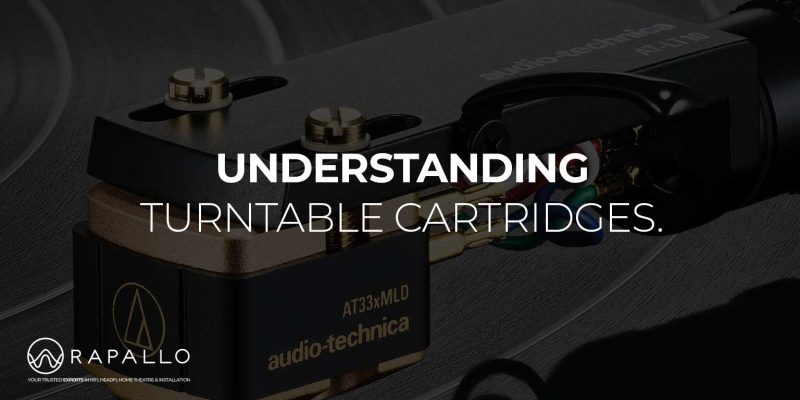 Understanding Turntable Cartridges : how they shape your sound and how to choose the right one… At Rapallo, we often…
 - Setting Up a Projector for a Golf Simulator
 A great golf simulator isn’t just about the launch monitor and software, the projector is what sells the illusion. The…
 - What Streaming Platform Should I Use?
 PlayFi vs HEOS vs MusicCast vs BluOS: Which Whole-Home Audio System Is Right for You? Imagine this: you wake up,…
 - HDMI Cables Explained
 HDMI Cables Explained: What’s the Difference, and what AudioQuest Cables should you use?? Walk into any electronics store or browse…
 - How To Set Up An Audiophile Network Switch
 How to Set Up an Audiophile Network Switch: A Guide for Better Sound Quality As high-resolution music streaming becomes the…
 NZ AV specialists available to help before or after your purchase
 Over 1800 verified product reviews from genuine NZ verified purchasers
 Secure checkout & local warranty, we look after you
 NZ price match on identical products so you know you are getting the right price