


Description
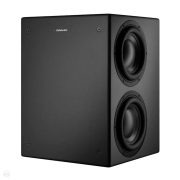
About the Dynaudio 9S 9.5-Inch Active Studio Subwoofer
The Dynaudio 9S 9.5-Inch Active Studio Subwoofer is designed to complement Dynaudio LYD and BM monitors, the 9S also works with other compatible speakers. Adjustable crossover controls help blend its output with your existing system, while balanced XLR connections suit professional audio equipment.
Whether you are balancing a bass line, checking a film soundtrack or enjoying music, the 9S helps reveal more of the recording’s low-frequency content.
View Manual >> View Brochure >> View Dynaudio Professional >>
→ What We Think About The Dynaudio 9S
The Dynaudio 9S is a sensible upgrade when you like your monitors but need a clearer picture of what is happening underneath them. For a smaller production room, its compact footprint and straightforward controls make it an approachable addition.
Its appeal is particularly strong with nearfield monitors. A well-integrated subwoofer can help you judge the relationship between kick drums and bass instruments, making it easier to hear when one part is masking another.
We would prioritise placement and calibration over simply increasing the bass level. Start with familiar recordings, make small adjustments and check the result at your listening position. The best integration should make the system sound more complete, with the subwoofer drawing little attention to itself.
→ Suggested System Match
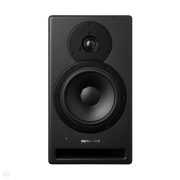
The LYD 7 and BM5 mkIII are practical starting points for a 9S system. Both suit nearfield listening, where adding a carefully adjusted subwoofer can provide useful information below the main speakers’ working range.
However, the best match depends on listening distance, room size and required output. For larger systems or more demanding deep-bass work, consider the Dynaudio 18S and its additional integration tools.
Take care with placement before adjusting the crossover. Moving the subwoofer or listening position can produce a greater improvement than changing the gain. Measurements are especially useful when the room makes certain bass notes sound disproportionately strong.
Recommended With This Product
- Dynaudio LYD 7: A suitable nearfield partner for a compact production system.
- Dynaudio BM5 mkIII: An option for workstations where speaker size matters.
- Balanced XLR Interconnects: Connect compatible controllers, subwoofers and active monitors.
- Balanced TRS-to-XLR Cables: Suitable for interfaces with balanced quarter-inch outputs.
- Monitor Controller: Provides accessible volume adjustment for the complete system.
- Measurement Microphone: Helps assess placement and the crossover transition.
- Acoustic Treatment: Addresses reflections and bass problems that electronic settings alone cannot resolve.
→ The Dynaudio 9S Is Ideal For
- Extending compact studio monitors
- Home recording and production rooms
- Electronic music and beat production
- Assessing kick-drum and bass balance
- Stereo and surround monitoring
- Editing film and video sound
- Workspaces with limited floor space
- Buyers wanting physical crossover controls
- Systems using balanced analogue connections
Frequently Asked Questions
- What is the Dynaudio 9S designed for?
The 9S adds low-frequency reproduction to a studio monitoring system. It is particularly useful when compact speakers make it difficult to assess bass instruments, electronic sub-bass or soundtrack content. - Is the Dynaudio 9S an active subwoofer?
Its built-in amplifier powers the bass driver. You need mains power and a suitable line-level source, without an additional subwoofer power amplifier. - Is the driver 9 inches or 9.5 inches?
The New Zealand distributor specifies a 240mm/9.5-inch driver. Dynaudio’s current website describes it as 9-inch. These descriptions refer to the same 9S model. - Can I use it with speakers from another brand?
The adjustable crossover allows integration with compatible speakers from other manufacturers. Placement, phase and level must be set for the complete system. - How do I connect it to active monitors?
Connect the source’s left and right outputs to the 9S stereo inputs. Then connect its SAT outputs to the active monitors. Use the upstream source or controller for everyday volume adjustment. - Can the 9S power passive speakers?
Its satellite outputs carry line-level audio. Passive speakers still require a separate power amplifier. - Does the 9S have RCA inputs?
It uses XLR connections. Equipment with RCA outputs may require appropriately wired cables or an interface; check connection and level compatibility before choosing this arrangement. - What do the satellite high-pass settings do?
The 60Hz and 80Hz settings reduce deep bass sent to the connected main speakers. Flat leaves that signal unfiltered. Choose the setting that produces the smoothest integration with your monitors. - What does the phase switch change?
It reverses the subwoofer’s polarity. Compare both positions at the listening seat and select the one that gives the more even combined response around the crossover region. - Does it include room correction or monitor presets?
The 9S uses manual gain, crossover and phase controls. The larger 18S adds DSP features including monitor presets, distance compensation and parametric EQ. - Can I use it with a surround processor?
Its LFE/Slave input accepts a suitable low-frequency feed. Follow the manual’s mode guidance when the processor supplies external bass management. - Can I add a second 9S?
The Slave output supports linking another compatible subwoofer. In Slave mode, gain and phase are controlled by the master unit, so follow the connection instructions carefully. - Does the 9S turn on automatically?
Auto mode activates the amplifier when it detects a signal and returns it to standby after a period without input. An always-on mode is also available. - Is the 9S suitable for a small room?
Its size makes it practical to accommodate, but room acoustics still determine the result. Careful placement, moderate gain and measurement can help avoid an uneven or overpowering bass balance.
Key Features
9.5-Inch Long-Throw Driver
The 240mm MSP driver provides the movement required for low-frequency reproduction. It gives smaller monitoring systems additional bass reach, helping you assess musical information that may otherwise be difficult to hear.
Built-In 300-Watt Amplifier
A dedicated Class-D amplifier powers the driver, so no external subwoofer amplifier is required. Connect a suitable line-level source, establish the gain setting and control everyday listening volume from your interface or monitor controller.
Bass Extension to 22Hz
Dynaudio publishes a lower response limit of 22Hz within its stated measurement conditions. This extends monitoring into deep bass territory, which is useful for checking synthesiser fundamentals, low percussion and soundtrack content.
Compact Sealed Enclosure
The sealed cabinet measures just 266mm wide. Its manageable size provides useful placement flexibility around a workstation, although the final position should be chosen for the smoothest response at the listening seat.
Substantial Double Front Baffle
A 37mm front baffle provides a rigid mounting surface for the driver. This construction supports the cabinet’s structural stability as the woofer moves, helping keep unwanted enclosure behaviour under control.
Adjustable Low-Pass Filter
The variable 50–150Hz low-pass control lets you set the upper operating range of the subwoofer when using the stereo inputs. This helps establish a suitable transition to the main speakers.
Selectable Satellite High-Pass Filter
The stereo satellite outputs offer Flat, 60Hz and 80Hz settings. Filtering deep bass from the main speakers can reduce their low-frequency workload, while Flat allows their signal to pass without this filtering.
Balanced XLR Connections
Stereo inputs and satellite outputs make the 9S easy to place within a compatible studio signal path. A separate LFE/Slave input also accommodates dedicated low-frequency signals and supported multi-subwoofer configurations.
Switchable Phase Alignment
A 0°/180° phase switch helps you assess how the subwoofer combines with the main speakers around the crossover region. Choose the setting that produces the more consistent combined bass response.
Automatic Standby and Expansion
Signal-sensing power control provides convenient daily operation. The dedicated Slave output also supports adding another compatible subwoofer, providing an expansion option when the room or monitoring requirements change.
Specifications
Brand: Dynaudio
Model: 9S
Product Type: Active studio subwoofer
Driver: Single 240mm / 9.5-inch long-throw MSP woofer
Amplifier: 300W Class-D
Frequency Response: 22Hz–175Hz, published ±3dB limits at 85dB
Maximum SPL: 106dB, manufacturer specification
Enclosure Type: Sealed
Front Baffle: 37mm, double-baffle construction
Low-Pass Filter: Variable, 50–150Hz on stereo SAT/SUB inputs
Satellite High-Pass Filter: Flat, 60Hz or 80Hz
Published Crossover Slope: Second-order Butterworth, 12dB per octave
Phase Control: 0° / 180°
Level Control: Rear-panel gain adjustment
Stereo Inputs: 2 × balanced XLR
LFE/Slave Input: 1 × XLR
Satellite Outputs: 2 × XLR
Slave Output: 1 × XLR
RCA Connections: None
Automatic Standby: Yes
Power Modes: On and Auto
Multiple Subwoofer Operation: Supported through Master/Slave connection
Mains Supply: 100–120V / 200–240V AC, 50/60Hz
Maximum Power Consumption: 350W
Maximum Standby Consumption: 0.5W
Finish: Black vinyl
Dimensions: 266mm W × 276mm H × 320mm D
Weight: 10.5kg
Packaging Dimensions: 400mm W × 430mm H × 400mm D
Sales Quantity: One subwoofer
Why Buy From Rapallo
✔ Advice on matching a subwoofer to your monitors
✔ Help checking interface and controller connections
✔ Practical placement and crossover guidance
✔ Support for studio and home listening systems
✔ Acoustic treatment recommendations
✔ New Zealand-based product support
✔ Contact us for current availability and delivery options











 NZ AV specialists available to help before or after your purchase
 Over 1800 verified product reviews from genuine NZ verified purchasers
 Secure checkout & local warranty, we look after you
 NZ price match on identical products so you know you are getting the right price