Estimated reading time: 5 minutes
Rapallo AV – Frequently Asked Questions
Here are some standard FAQ’s for Audio & Visual Solutions we get that might help you.
Audio Products & Hi-Fi Systems
Rapallo AV specialises in high-quality home & commercial audio & visual products, including integrated amplifiers, stereo and surround speakers, turntables, CD players, DACs, music streamers, headphones, and wireless audio systems.
Yes. We consider room size, layout, listening distance, volume levels, and music preferences to recommend a system that performs well in your specific space — not just what looks good on paper.
Very important. Matching the right amplifier power and character to your speakers ensures better control, clarity, and long-term reliability. Our team can help avoid common mismatches.
Good-quality cables matter, but they don’t need to be extreme. We recommend well-built, appropriately specified cables that suit your system level and budget.
Many modern amplifiers include built-in phono stages, allowing you to connect a turntable directly. If your amplifier doesn’t have one, we can recommend a suitable external phono preamp.
Bluetooth is convenient and easy to use, while Wi-Fi streaming offers higher sound quality, better range, and multi-room support. We can help you decide which suits your listening habits.
Yes. Many modern compact and half-width systems deliver excellent sound quality while saving space, making them ideal for apartments, offices, or minimalist setups.
Most integrated amplifiers include headphone outputs, and we also stock dedicated headphone amplifiers for higher-end headphone listening.
Yes. A properly integrated subwoofer can add depth and impact to both music and movies without overwhelming the sound when set up correctly.
Absolutely. Many systems are designed to be modular and expandable, allowing you to upgrade components as your needs or budget change.
TVs, Projectors & Visual Products
Rapallo AV offers a range of premium TVs, including OLED, QLED, Mini-LED, and LED models from trusted manufacturers.
OLED TVs offer perfect blacks and superior contrast, while high-end LED TVs can deliver higher brightness, making them suitable for brighter rooms.
Yes, depending on the model and environment. Modern projectors are bright, sharp, and quiet enough for regular use, especially in controlled lighting conditions.
We help assess room size, throw distance, ambient light, and screen size to recommend a projector that fits your space and usage.
Yes. A dedicated screen improves brightness, contrast, and colour accuracy compared to projecting onto a plain wall.
HDR improves contrast, brightness, and colour detail, creating a more realistic image. Formats include HDR10, HDR10+, and Dolby Vision.
For most consumers, 4K remains the sweet spot. 8K offers future-proofing but has limited native content at present.
Yes. We can recommend compatible wall mounts and installation options to ensure safe, secure mounting.
Home Theatre & Surround Sound
Soundbars offer simplicity and improved TV sound, while full home theatre systems provide true surround sound, greater impact, and better immersion.
Dolby Atmos adds height and three-dimensional sound, creating a more immersive experience for movies, games, and supported music.
Yes. We specialise in custom home theatre design, including speaker placement, equipment selection, and room considerations.
No. Excellent home theatre systems can be built into living rooms, media rooms, or multipurpose spaces.
Absolutely. We ensure compatibility with 4K/120Hz, HDMI 2.1, low-latency gaming features, and immersive sound formats.
Installation, Setup & Support
Yes. We can arrange professional installation services for TVs, projectors, and home theatre systems.
Yes. We provide setup guidance and optimisation advice, even for self-installed systems. There is a charge for this.
We can recommend professional calibration services to ensure accurate colours and optimal performance.
All products include manufacturer warranties, backed by local support and consumer protections.
We’ll assist with warranty claims, diagnostics, and service coordination, making the process as smooth as possible. Please contact one of our team first.
Ordering, Shipping & After-Sales
Yes. We offer nationwide shipping, with careful packaging to protect your equipment.
In most cases, yes. Please contact us to confirm availability and arrange pickup before you arrive at Rapallo.
We may offer finance or payment options depending on the product and current promotions. Contact us for details.
Returns and exchanges are handled in line with consumer protection laws and product condition. We recommend contacting us before returning any items.
Generally no, but in some cases, we can assist with upgrade paths or trade-in advice. Availability varies by product.
You can reach us via phone, email, or our website contact form. Our team is happy to help before and after your purchase.
- Why Every Audiophile 2-Channel System Can Benefit From a Subwoofer
 For years, subwoofers were unfairly associated with home theatre explosions, rattling lounge windows, or neighbours filing complaints. But in the…
 - Understanding Turntable Cartridges
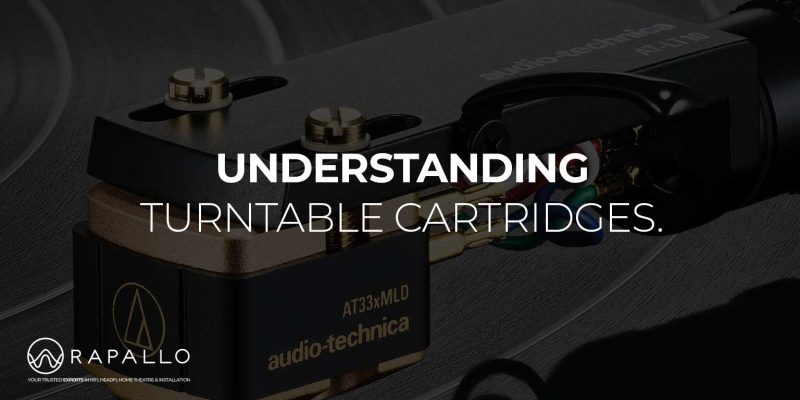 Understanding Turntable Cartridges : how they shape your sound and how to choose the right one… At Rapallo, we often…
 - Setting Up a Projector for a Golf Simulator
 A great golf simulator isn’t just about the launch monitor and software, the projector is what sells the illusion. The…
 - What Streaming Platform Should I Use?
 PlayFi vs HEOS vs MusicCast vs BluOS: Which Whole-Home Audio System Is Right for You? Imagine this: you wake up,…
 - HDMI Cables Explained
 HDMI Cables Explained: What’s the Difference, and what AudioQuest Cables should you use?? Walk into any electronics store or browse…
 - How To Set Up An Audiophile Network Switch
 How to Set Up an Audiophile Network Switch: A Guide for Better Sound Quality As high-resolution music streaming becomes the…
 NZ AV specialists available to help before or after your purchase
 Over 1800 verified product reviews from genuine NZ verified purchasers
 Secure checkout & local warranty, we look after you
 NZ price match on identical products so you know you are getting the right price